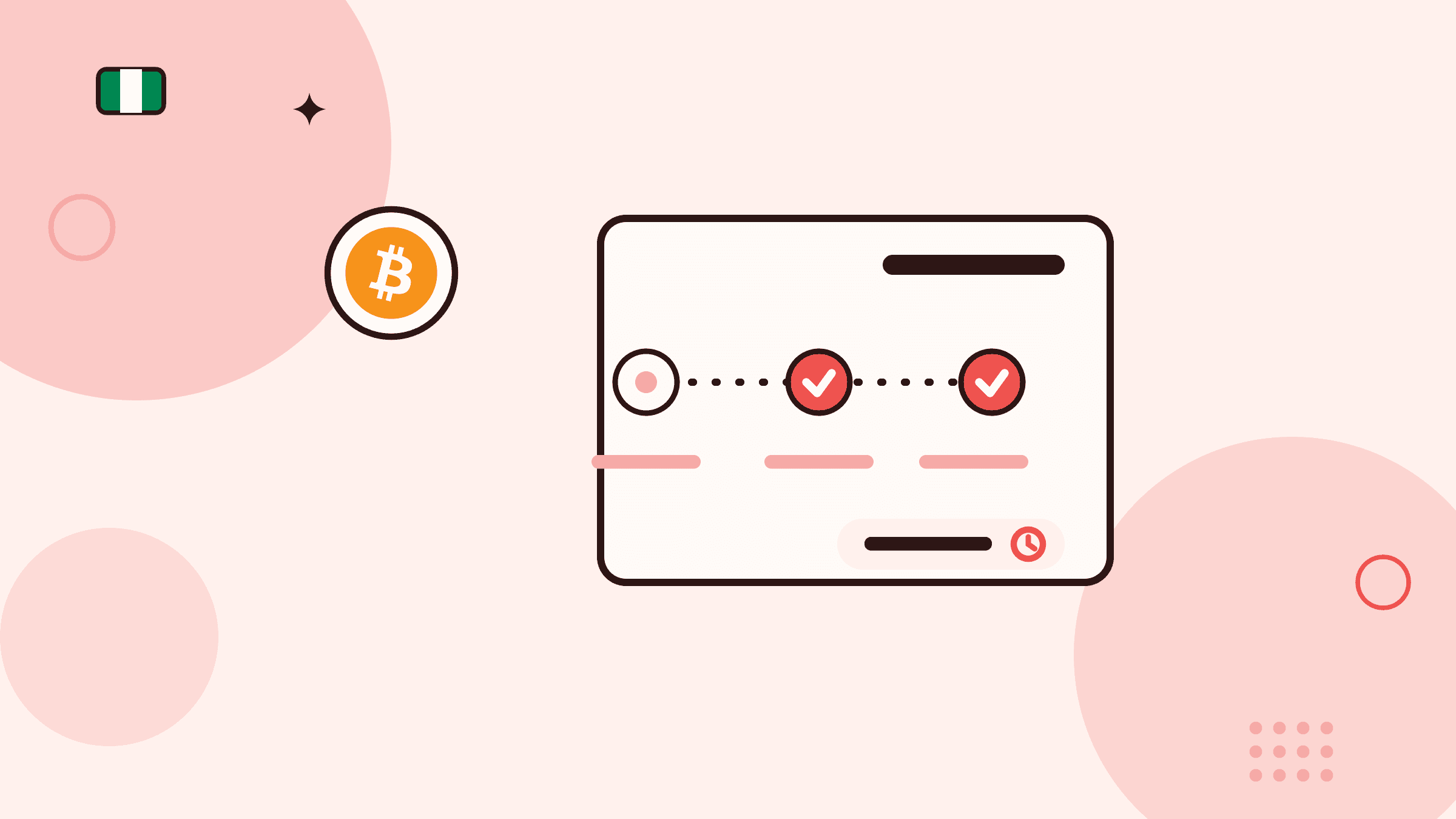
How to read a sale status in Nigeria
- Step 1
Open the order, not the dashboard summary
The order's own page carries the current status and the details behind it. A summary elsewhere can be a moment behind.
- Step 2
Identify how the order is funded
A wallet-funded order has no blockchain wait. An externally funded one cannot progress until your transfer is seen and confirmed.
- Step 3
Expect a confirming stage on external deposits
Networks require a number of confirmations before a transfer is treated as final. This waiting period is expected behaviour, not a delay to report.
- Step 4
Read settlement separately from payout
Settlement means the sale is complete on ebitpoint. The payout is the naira transfer to your bank destination that follows it.
- Step 5
Contact Support with the reference if a stage stalls
If a status has not moved well beyond the timing the order describes, message Support from your signed-in account with the order reference and transaction hash.
A status describes a stage, not a problem
Most questions about sale statuses come from reading a stage as a fault. An order that says it is confirming is doing exactly what it should: waiting for a blockchain to agree that your transfer is final.
The useful question is not what the status is called, but whether time has passed well beyond what the order itself describes. Until then, waiting is the correct action.
Why external deposits wait and wallet-funded sales do not
When a sale is funded from a balance already inside your ebitpoint account, nothing has to travel across a blockchain, so there is nothing to confirm. Those orders move quickly.
An external deposit has to be broadcast, included in a block, and then buried under enough further blocks to be treated as settled. Different networks take very different amounts of time to do that.
Settlement and payout are two different events
Settlement is the point at which ebitpoint treats the sale as done on its side. The naira payout to your Nigerian bank account is the transfer that follows.
That distinction explains the most common surprise: an order reaching completed slightly before the money appears in your bank. The payout has been sent; your bank is posting it.
What to send Support if you do need help
The order reference and the blockchain transaction hash together are enough to trace almost any sale. Send them from inside your signed-in account so the conversation is attached to the right order.
Never share a password, one-time code, or recovery phrase with anyone asking to help with an order. Support does not need them, and no genuine process will ask.