
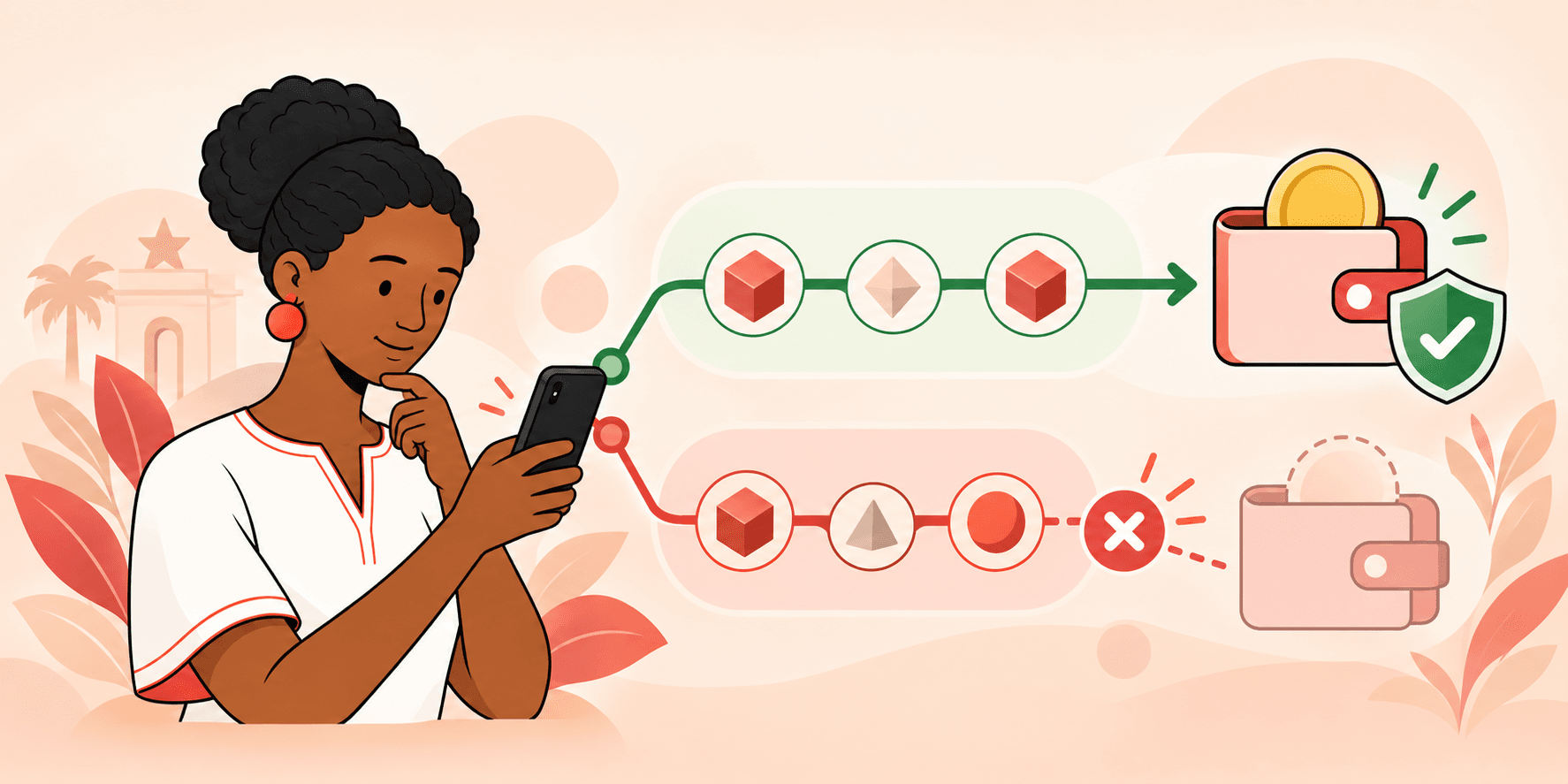
How to send USDT to the right place
- Step 1
Read the network on the order first
The order states which network it expects. Treat that as the instruction, not a suggestion, and do not assume it matches your last transfer.
- Step 2
Check which network your USDT is actually on
Your wallet or platform shows the network beside the balance. USDT on one network cannot be sent from that balance to another network's address.
- Step 3
Match the address format
Different networks use different address formats. If the address does not look like the format your wallet expects for that network, stop.
- Step 4
Copy from the order, never from history
Use the address the current order displays. Networks offered for new deposits change, so an old address may no longer be monitored.
- Step 5
Send a small test if the pairing is new to you
If you have not used this wallet and network combination before, a small transfer confirms the route before the full amount.
One name, several separate balances
Tether is not a single thing moving around one network. The same ticker is issued on several different networks, and each one is effectively its own balance with its own addresses and its own costs.
This is the root of most USDT mistakes. The ticker looks identical in every wallet, so nothing on screen warns you that two balances are on incompatible networks.
The order is the source of truth
Your order names the network it expects, and that is the only network that will be credited to it automatically. Anything else needs manual recovery, which takes time and is not guaranteed.
Which networks are offered for new deposits is not fixed forever. Read the current order each time rather than relying on what you used previously or on what another exchange defaults to.
Address formats are a useful check
Different networks use visibly different address formats. If the address on the order does not resemble what your wallet expects for the network you have selected, treat that as a reason to stop.
After pasting, compare the first and last characters against the order. Malware that silently replaces a copied address is a real category of attack, not a theoretical one.
If it does go wrong
Contact Support from inside your signed-in account and provide the transaction hash. That is the single piece of information that makes a misdirected transfer traceable.
Do not send a second transfer to correct the first, and be extremely wary of anyone who contacts you offering to recover the funds. Recovery offers that arrive unprompted are almost always a second attempt to take money.