
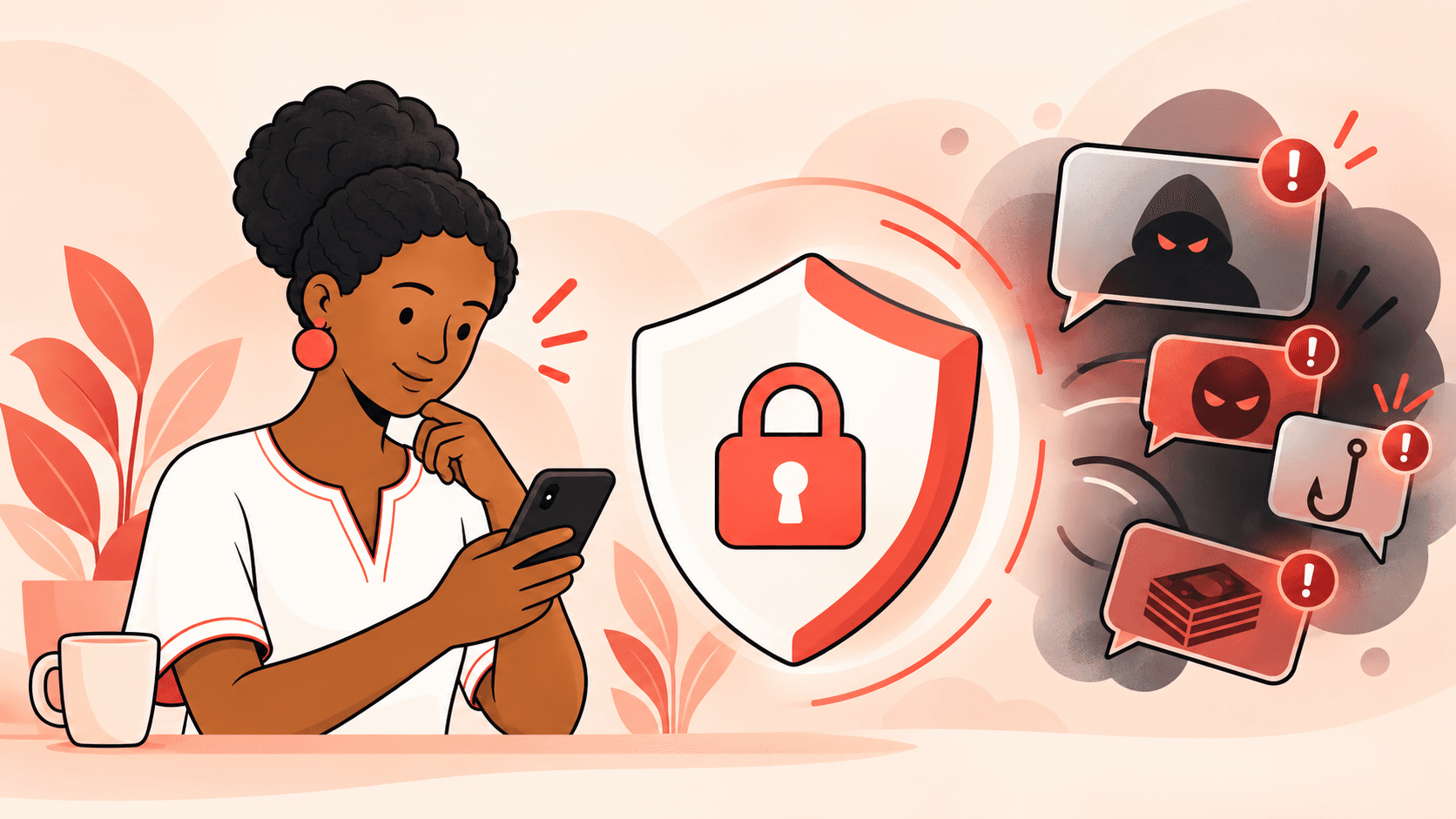
How to check something before you act on it
- Step 1
Treat guaranteed returns as disqualifying
No genuine investment guarantees a return. A promised fixed profit on a volatile asset is the clearest single warning sign there is.
- Step 2
Refuse third-party payout destinations
A payout should reach a bank account in your own name. Being asked to send it elsewhere is a pattern in fraud, not a convenience.
- Step 3
Verify inside your account, never from a message
If a message claims something about your account, open the account yourself and check. Do not use the link you were sent.
- Step 4
Distrust unprompted help
Someone who appears in a chat or replies to your public post offering to fix a transaction is rarely support, however convincing the profile looks.
- Step 5
Ignore recovery offers entirely
Offers to recover lost crypto for an upfront fee are a second theft aimed at people already hurt by the first.
Learn the shapes, not the schemes
Specific scams are rebranded constantly, so memorising names does not protect anyone for long. What persists is the structure underneath: an impossible promise, an artificial deadline, or a destination that is not yours.
If you can recognise those three, you will catch most attempts without needing to know what the current version calls itself.
Why urgency is always present
Manufactured urgency appears in nearly every case because it works. A limited window or a threatened account closure exists to stop you from checking anything.
The remedy is simply to check anyway. Nothing genuine is lost by pausing, opening your own account, and confirming that the situation described is real.
The payout destination is a bright line
In Nigeria a sale pays out to a bank account. If anyone suggests the payout should reach an account that is not yours, the transaction has stopped being a trade and become a transfer to a stranger.
There is no version of this that is a favour, a shortcut, or a workaround for a fee. Treat the request itself as the answer.
Recovery offers target people twice
After a loss, unprompted messages offering to trace or recover funds are common. They ask for a fee, or for wallet access, and deliver nothing.
Report a real loss through your signed-in account with the order reference and transaction hash, and ignore anyone who approaches you about it unasked.